
SALMON MOOCHING
Yeti product short film on the history of Mooching for Chinook Salmon in Puget Sound
“Mooching” a version of Drift fishing
Wind Knot Guides typically fish using the mooching technique—engines off, light tackle in hand. Mooching involves a 9-to-11-foot rod, line counter reel, a 2-5 oz banana sinker, and a cut plug herring for bait. The learning curve is easy, making it an exciting method for both seasoned and beginner anglers. Drop the line, Reel to get the bait spinning, feel the bite and battle the fish without a downrigger or flasher! This is hands-on fishing. For those not keen on holding the rod and actively dropping line or reeling most of the day, Captain Dave can offer downrigger trips trolling with Scotty downriggers. While trolling is common in late August and September, most other months we prefer to “mooch.”
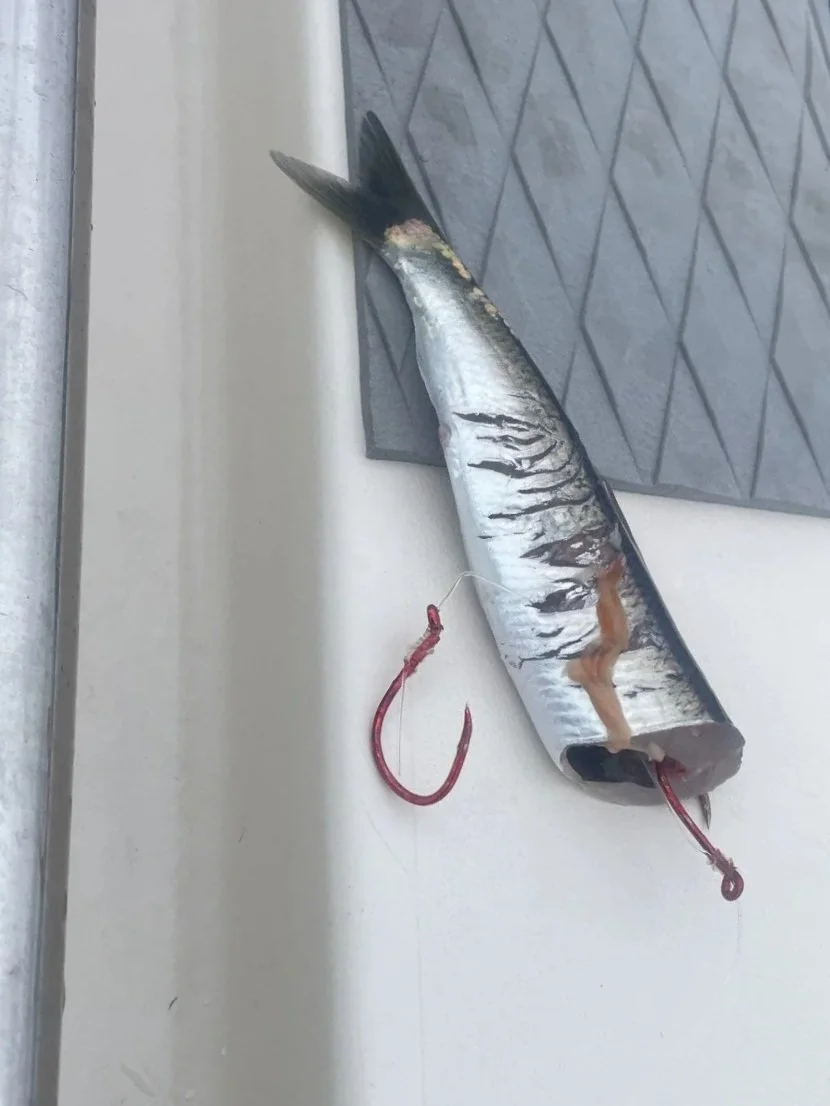
Cut Plug Herring either live or frozen
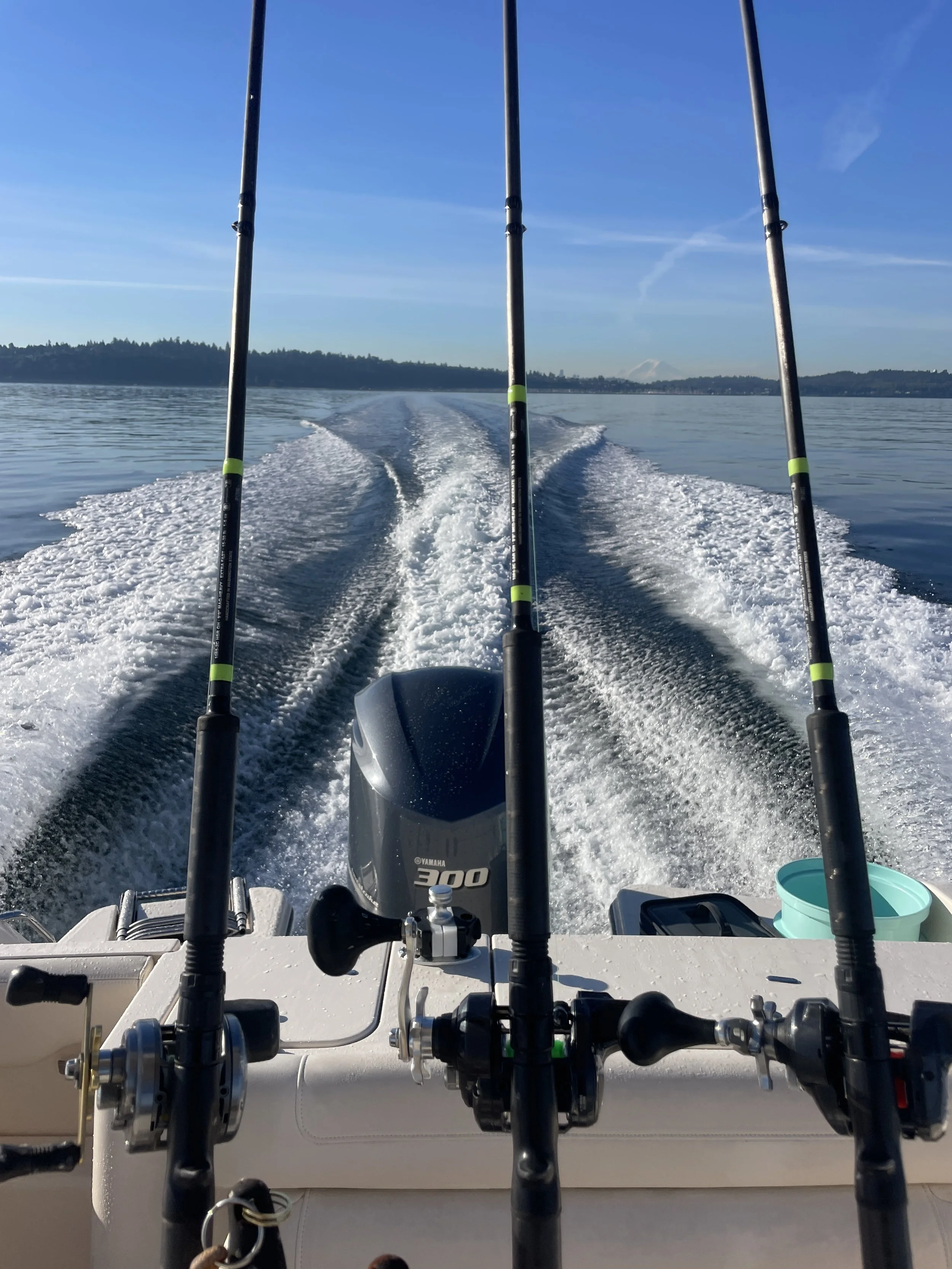
Shimano and G Loomis Mooching Reels and Rods
Banana Sinker and two hook Leader
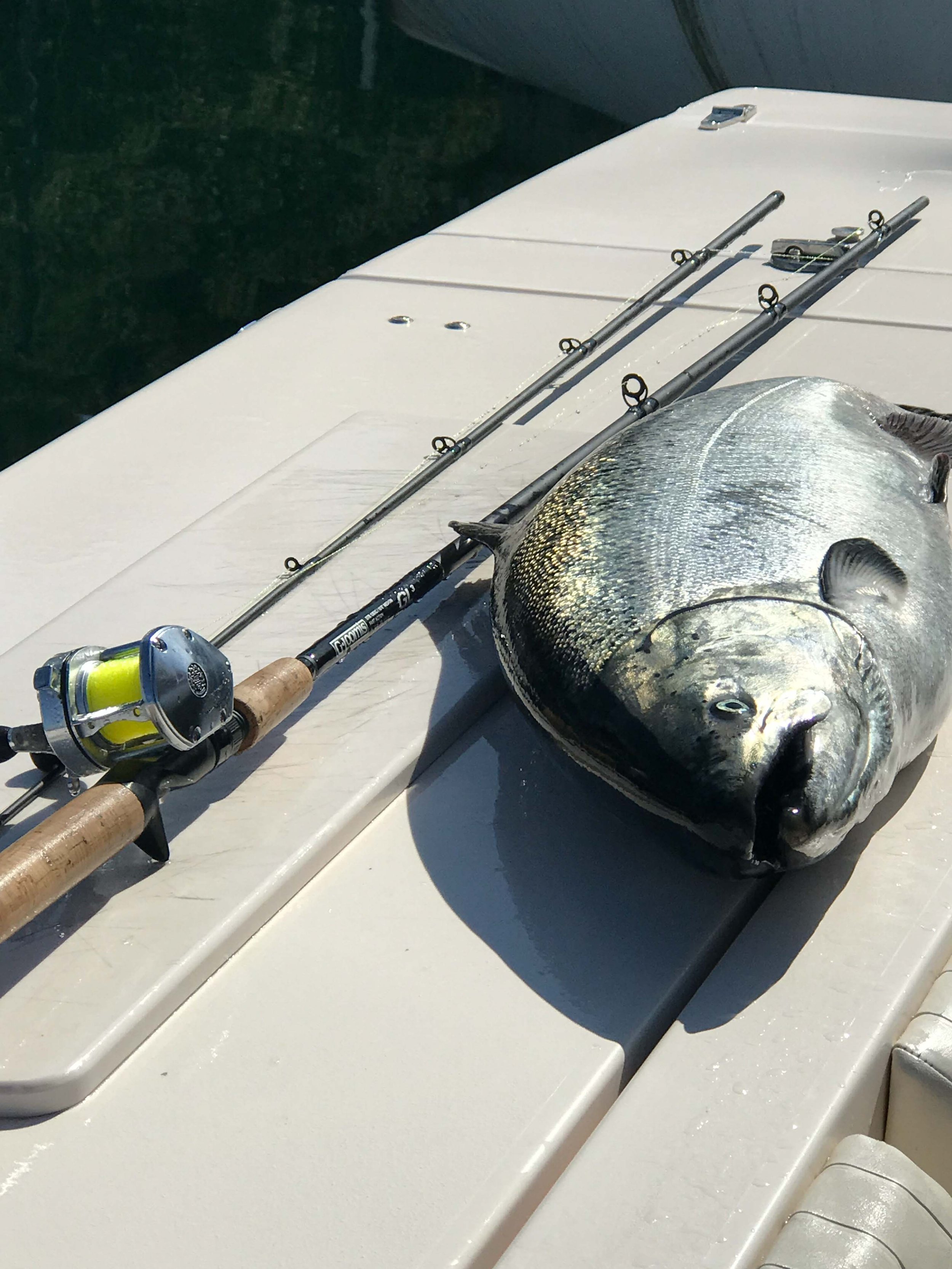
Chinook Salmon and Mooching Rod
We use the Mooching technique when targeting King Salmon. Mooching is form of drift fishing where the goal is to make a rigged herring look like a wounded swimming snack. Terminal gear consists of a 2-to-4-ounce banana weight and a double hook leader 6-10feet in length. Light tackle premium Shimano and G Loomis reels and rods allow you to work the bait through the water column and feel the grab!
Instead of driving the boat forward like in trolling to move the gear, you turn the engines off and drift with the wind and current.
Mooching for salmon is an easy to learn, traditional, active fishing method that began in Elliott Bay, Puget Sound. Instead of leaving the rod in a holder like passive trolling, you hold the rod and intentionally move a spinning bait up and down through the water to provoke aggressive salmon strikes.
The Bait (Cut-Plug Herring): You cut the head off a whole herring at a roughly a 45-degree downward angle and a 45-degree bevel. When pulled through the water, this assists the herring to spin tightly.
The Rigging:
A typical rig uses a 2–6-ounce banana sinker, a bead-chain swivel to reduce line twist, and a 6-10 foot mono leader with two hooks tied in tandem (a mooching rig) cut herring.
The Drop: Cast your rig slightly away from the boat. Keep your thumb lightly on the reel spool as it sinks to maintain minor tension, prevent tangles, and feel for "drop bites". On the drop, bites are often felt through the rod tip or through your thumb that is slowing the drop.
The Retrieval: Once you hit your target depth, slowly reel the bait back up to the surface.
The Hookset “Crank then yank”
Salmon don’t usually bite hard at once; they nose or lift the bait, making the line go slack. Don’t jerk the rod. Reel quickly until the line is tight and the rod loads. When you feel steady heavy pressure, sweep the rod back firmly to set the hook.