CHINOOK SALMON MOOCHING
Yeti product short film on the history of Mooching for Chinook Salmon in Puget Sound
Puget Sound Chinook Salmon
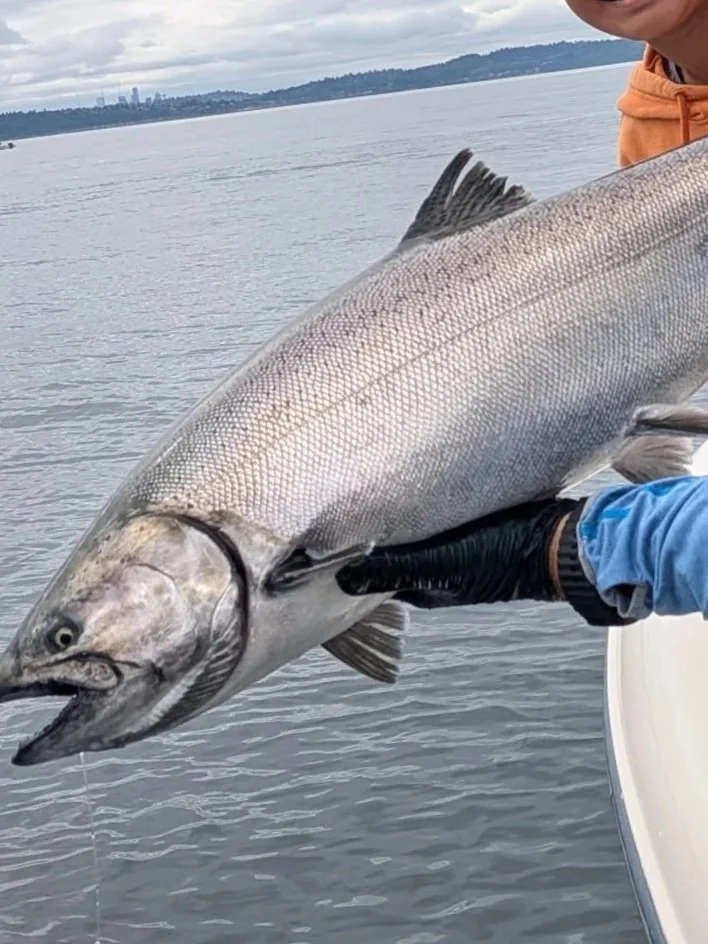
Chinook Salmon are present in Puget Sound all 12 months of the year. Most leave the sound for the fertile feeding grounds of the pacific and return to the Seattle area starting in late May and peaking around the first week of August.
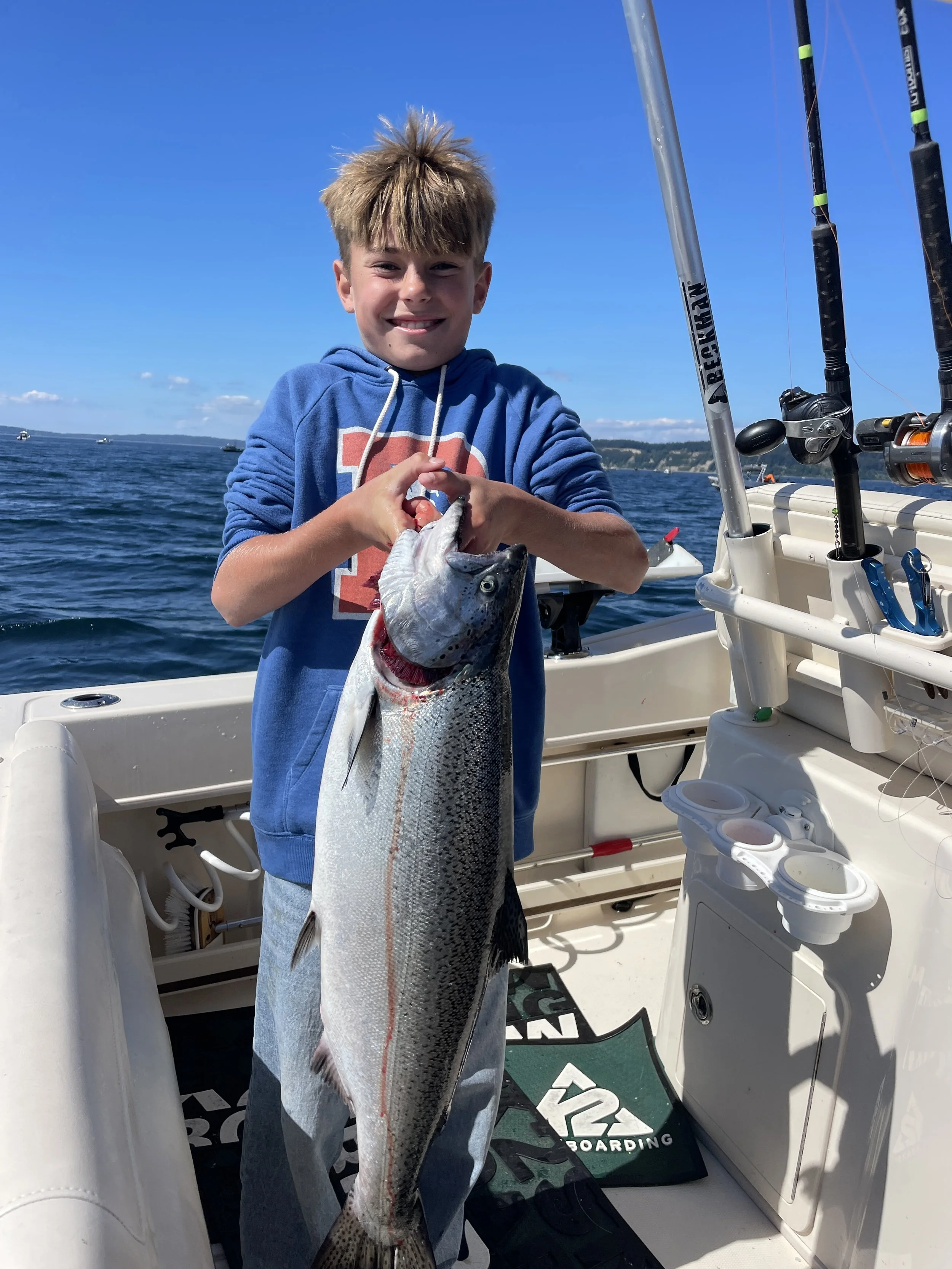
The retention is highly regulated, and most days Chinook salmon must be released. Catching a King Salmon is an incredible experience retained or released.
The Chinook salmon (Oncorhynchus tshawytscha), also known as the king salmon, is the largest species of Pacific salmon. It is an essential ecological, cultural, and economic cornerstone of the Pacific Northwest.
Key Characteristics
Size: They are the largest Pacific salmon. They typically average 10 to 25 pounds, though they can exceed 100 pounds in other parts of the pacific.
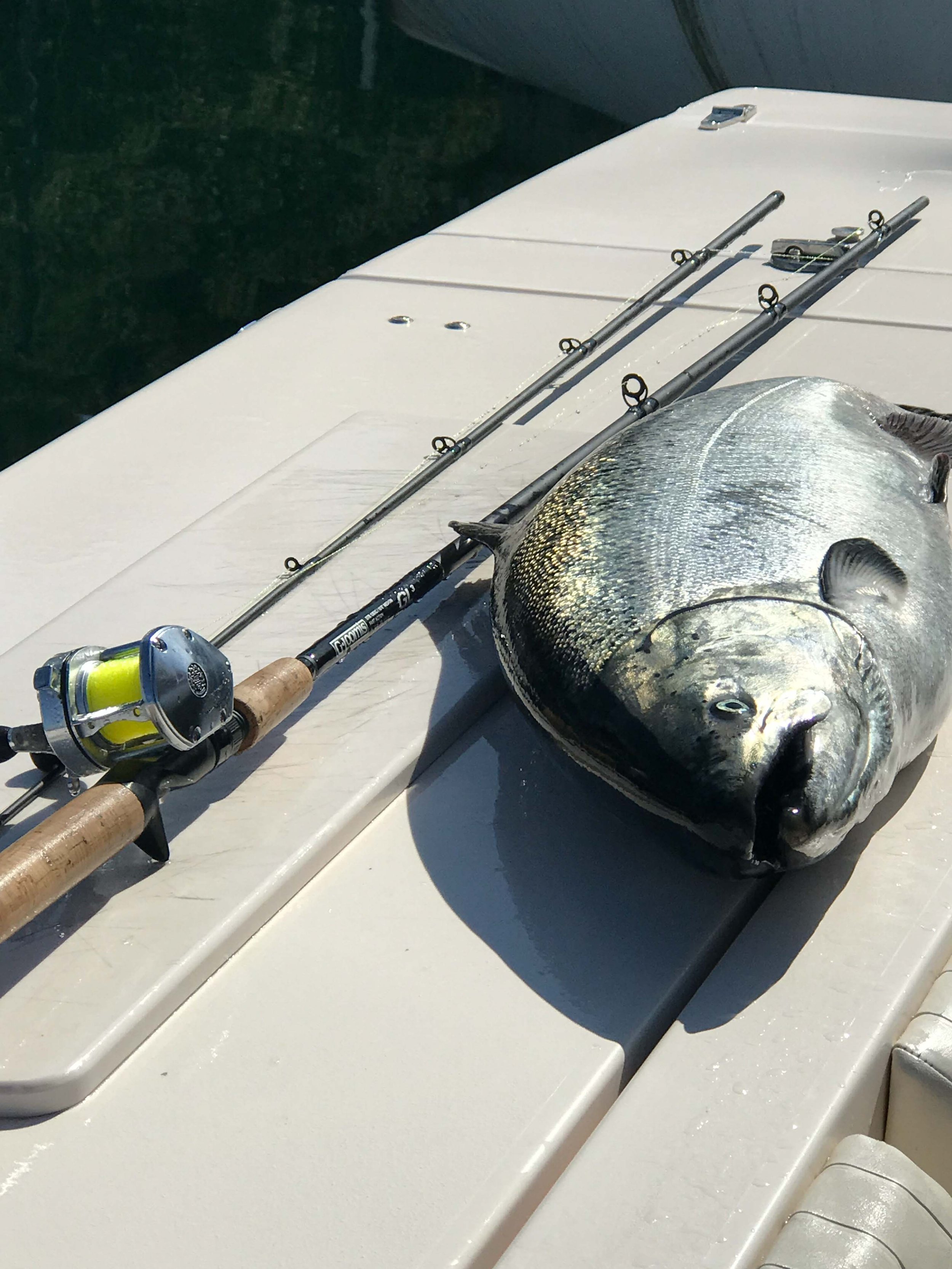
Appearance: At sea they’re blue-green on top, silvery on the sides, with black spots on back and tail. A black stripe along the lower gum gives them the nickname “Blackmouth.
Spawning Transformation: When they enter fresh water to spawn, their color turns olive-brown, deep red, or purple. Breeding males grow a strongly hooked upper jaw.
Life Cycle and Behavior
Anadromous Lifecycle: They hatch in freshwater rivers, migrate to the open ocean to feed and mature, and return to their exact birth streams to reproduce.
Diet: Juveniles feed on insects and small crustaceans. Adults primarily prey on smaller fishlike herring.
Reproduction: Females dig gravel nests called redds to lay thousands of eggs. All Chinook die after spawning, returning vital nutrients to the river.
We use the Mooching technique when targeting King Salmon. Mooching is form of drift fishing where the goal is to make a rigged herring look like a wounded swimming snack. Terminal gear consists of a 2-to-4-ounce banana weight and a double hook leader 6-10feet in length. Light tackle premium Shimano and G Loomis reels and rods allow you to work the bait through the water column and feel the grab!
Instead of driving the boat forward like in trolling to move the gear, you turn the engines off and drift with the wind and current.
Mooching for salmon is an easy to learn, traditional, active fishing method that began in Elliott Bay, Puget Sound. Instead of leaving the rod in a holder like passive trolling, you hold the rod and intentionally move a spinning bait up and down through the water to provoke aggressive salmon strikes.
The Bait (Cut-Plug Herring): You cut the head off a whole herring at a roughly a 45-degree downward angle and a 45-degree bevel. When pulled through the water, this assists the herring to spin tightly.
The Rigging: A typical rig uses a 2–6-ounce banana sinker, a bead-chain swivel to reduce line twist, and a 6-10 foot mono leader with two hooks tied in tandem (a mooching rig) cut herring.
The Drop: Cast your rig slightly away from the boat. Keep your thumb lightly on the reel spool as it sinks to maintain minor tension, prevent tangles, and feel for "drop bites". On the drop, bites are often felt through the rod tip or through your thumb that is slowing the drop.
The Retrieval: Once you hit your target depth, slowly reel the bait back up to the surface.
The Hookset “Crank then yank” Salmon don’t usually bite hard at once; they nose or lift the bait, making the line go slack. Don’t jerk the rod. Reel quickly until the line is tight and the rod loads. When you feel steady heavy pressure, sweep the rod back firmly to set the hook.
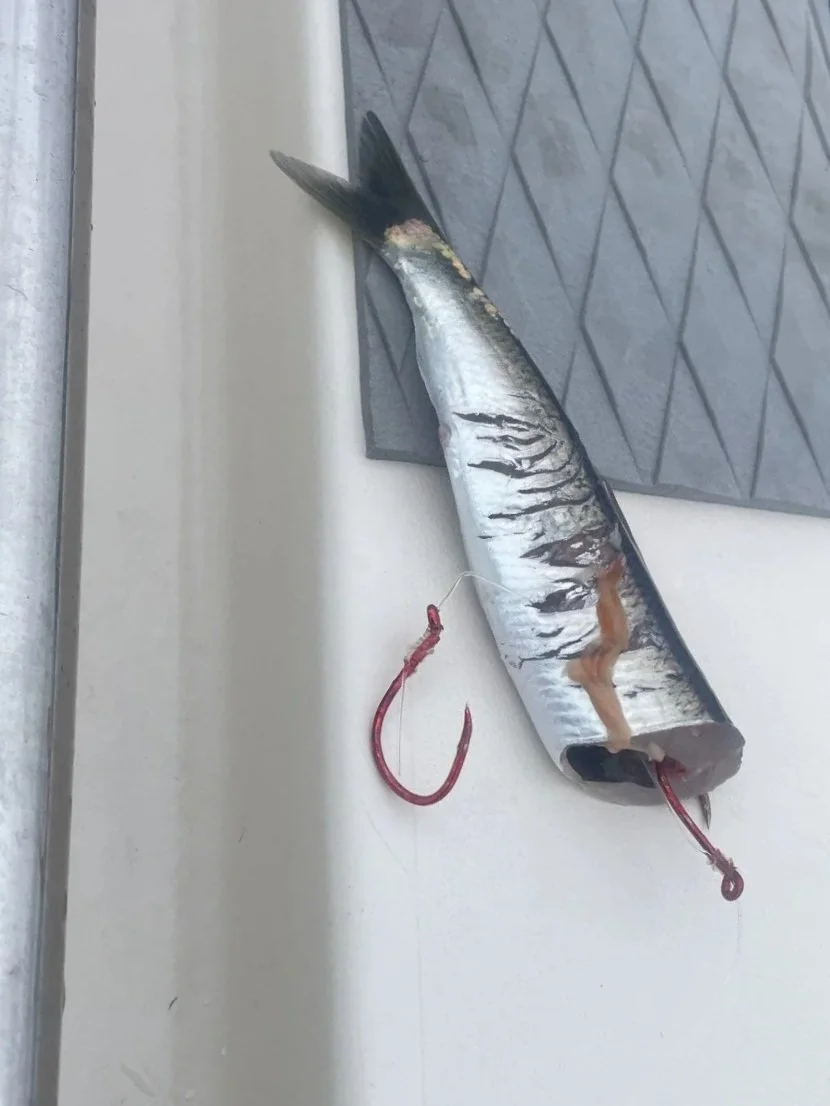
Cut Plug Herring either live or frozen
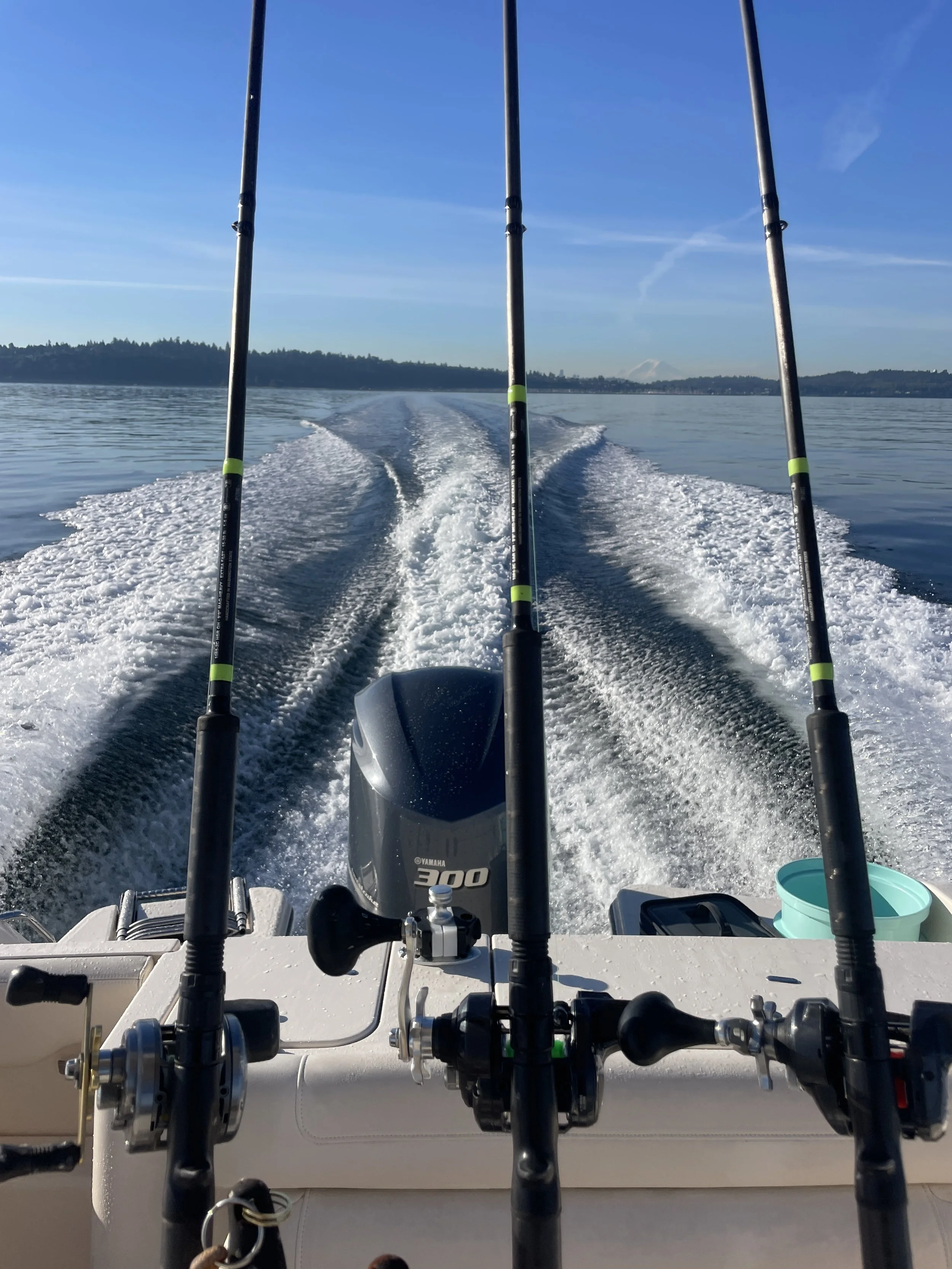
Shimano and G Loomis Mooching Reels and Rods
Banana Sinker and two hook Leader
Chinook Salmon and Mooching Rod
Sam Bachman July 2026
Great Trip! Last Second
Booked the night before and confirmed right away. Dave was an awesome dude and had great stories to tell. Could tell he was super knowledgeable and helped put us on some giants!!! Highly recommend!!!